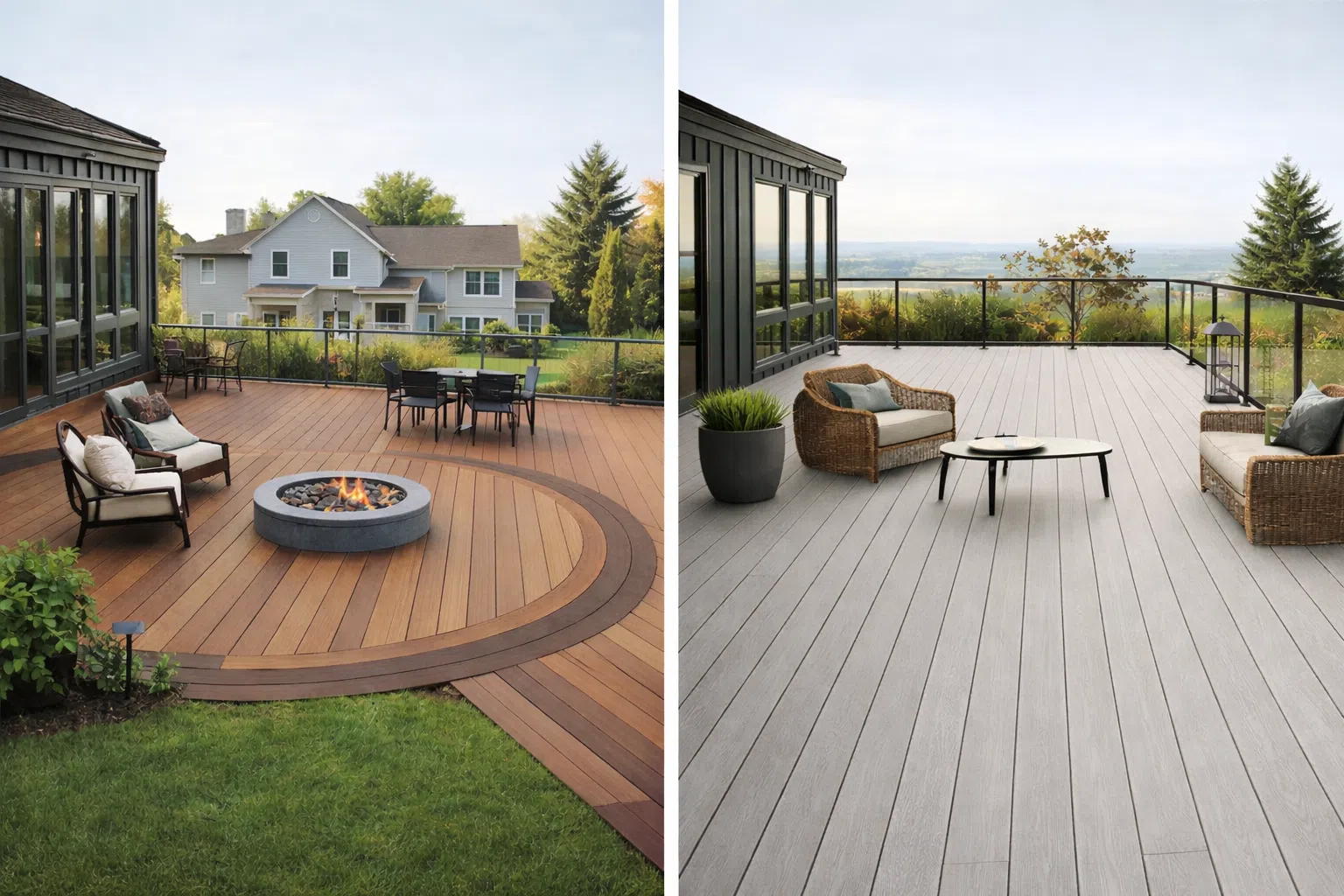
Durability: PVC decking typically lasts 50+ years, outperforming composite decking’s 25-30 year lifespan.
Material composition: PVC decking is made from 100% synthetic polyvinyl chloride, while composite decking blends wood fibers and recycled plastics.
Maintenance: Both are low-maintenance alternatives to wood, but PVC requires less frequent cleaning and upkeep.
Appearance: Composite decking offers more natural woodgrain patterns, while PVC provides consistent color and smooth finishes with realistic wood looks.
Installation: PVC decking is lighter and generally easier to install than composite decking.
Cost: Composite decking usually has a lower upfront cost, but PVC decking offers better long-term value due to durability and minimal maintenance.
Weather resistance: PVC is highly resistant to moisture, mold, mildew, and extreme temperatures, making it ideal for humid climates like Texas.
Fire resistance: Certain PVC decking collections, like TimberTech Advanced PVC, carry top fire safety ratings suitable for fire-prone areas.
Design options: Both materials come in various colors, textures, and profiles, with PVC offering greater flexibility for custom designs.
Environmental impact: Composite decking often contains recycled wood fibers and plastics, while PVC decking is fully synthetic but recyclable.
PVC decking, also known as vinyl decking, is decking made from polyvinyl chloride, which is a durable synthetic material designed specifically for outdoor use.
It’s different from wood or wood-plastic composites, because PVC decking doesn’t contain any organic materials. It will not absorb moisture, rot or splinter over time.
PVC decking is also stain resistant, making it easier to maintain its appearance with less effort compared to traditional wood.
For Austin-area homeowners comparing deck choices, PVC decking materials are known for their long lifespan and consistent performance in harsh conditions, as Central Texas weather can be.
PVC decking is better suited for extreme conditions in Austin due to its durability and low maintenance. PVC boards are manufactured to resist mildew, mold and damage from insects, which can be ongoing concerns for natural wood.
The aesthetics of today’s PVC decks have come a long way. Many brands and lines offer realistic wood grain textures and a variety of colors, allowing homeowners to get a nice deck that looks like real wood with far less maintenance.
PVC deck boards maintain their vibrant color over time, even under UV exposure. Darker colors of PVC can absorb significant heat, while lighter colors stay cooler underfoot.
Because PVC boards are uniform and lightweight, installation is generally more efficient, compared to other synthetic materials.
PVC can expand and contract with temperature changes, so it’s important to follow manufacturer guidelines during installation to prevent issues.
PVC is especially appealing in areas with strict building codes, including regions that are prone to fires.
Pros:
Versatile color options
Durable
Weather resistant
Mold and mildew resistant
Real wood looks
Lightweight
Low maintenance
Best choice for fire zones
Cons:
Higher upfront cost
Low-quality or outdated PVC materials may be slippery
Composite decking is a popular alternative to wood decking and consists of a blend of composite decking materials, generally made up from recycled wood fibers and plastic.
The materials are combined to create weather-resistant boards and still offer a wood-like appearance. Composite decking is designed to provide a natural look that closely resembles real wood, making it an attractive choice for those who want the appearance of wood without the drawbacks.
For homeowners seeking a modern alternative to traditional wood, composite decking strikes a balance of reduced maintenance and natural aesthetics. Traditional wood decking is considered high maintenance due to the need for regular staining, sealing, or painting to maintain its appearance and durability.
Since composite decking contains wood fibers, the boards display realistic woodgrain patterns and texture, appealing to those who prefer the look of real wood, but without the required upkeep.
Most composite decking materials are resistant to fading, moisture and insect damage, which offers performance in a range of climates.
Many products also feature protective caps that enhance resistance to stains, mold and mildew, and durability.
Although composite decking doesn’t require as much maintenance as natural wood, proper installation ensures long-term performance.
Composite decking requires more maintenance than PVC, including occasional cleaning with soapy water. Some boards might require specific spacing or even substructure support, depending on product design.
Pros:
Versatile color options
Durable
Weather resistant
Mold and mildew resistant
Real wood looks
Low maintenance
Slip resistant
UV resistant
Cons:
Flexible boards require specific substructure installation
Uncapped boards may be prone to water and mold damage
What’s the difference between PVC and composite decking?
The main difference is what’s on the inside.
Composite decking is made from a mix of wood fibers and recycled (often) plastics. While it’s more durable than traditional wood, that organic wood filler is still vulnerable to moisture. Over time, this can lead to mold, mildew, and rot, which can become a real concern with our humid Texas summers. In terms of durability, composite decking material stands up well to everyday wear and tear, but may show signs of fading or staining over the years.
PVC decking, on the other hand, is made from 100% polymer material, that means zero wood or other organic fillers. This makes it far more resistant to moisture damage. PVC decking material stands up exceptionally well to environmental challenges, resisting fading, staining, and the test of time better than most alternatives.
It’s worth noting that PVC decking is lighter than composite decking, making it easier to handle during installation. The installation process for PVC and composite decking is similar, but PVC is generally easier to work with due to its lightweight nature.
Feature
PVC Decking
Composite Decking
Real wood looks
⭐⭐⭐
⭐⭐
Water resistance
Great
Good
Mold resistance
⭐⭐⭐
⭐⭐
Maintenance
Low
Low
Life span
50+ years
25–30+ years
Upfront cost
💲💲💲
💲💲
PVC vs. composite decking
Both PVC and composite decking offer clear advantages over traditional wood decks, but their performance differs in several important areas.
Understanding how material handles durability, how much maintenance is required, as well as design flexibility, can all help homeowners choose the right fit for their outdoor spaces.
Which lasts longer?
PVC decking typically has the longest lifespan, due to the synthetic materials that make it up. Since there is no organic content, it is moisture, insect damage and rot resistant, allowing most PVC decks to last 50 years or more.
Composite decking is also more durable than traditional wood decking, however, it contains wood fibers that shorten its lifespan, generally lasting 25-30 years, if properly maintained.
Environmental elements
Composite and PVC decking are both designed to be weather-resistant, but they respond differently to exposure and environmental stress.
Composite boards may absorb moisture due to wood fibers in the materials, so humid climates may be a concern. PVC deck boards are nonporous, so they are highly resistant to mold, water and mildew.
Many composite products also incorporate recycled materials, which appeal to many environmentally conscious homeowners.
Which is easier to maintain?
Both PVC and composite decking are considered low maintenance compared to traditional wood, but PVC requires the least ongoing care. Composite decking generally requires more frequent cleaning to prevent build-up in textured surfaces, especially if uncapped. Long-term maintenance costs tend to be lower over time with PVC decking.
Capped vs. uncapped boards
Capped board offers a protective outer layer to improve moisture resistance, stain protection and color retention.
Uncapped composite boards are at more of a risk to moisture intrusion and mold growth, and PVC decking is fully protected because of their material makeup, regardless of capping.
Design choices and customization
Both offer a wide range of design choices, including width of boards, edge profiles, and railing systems. PVC deck materials typically offer greater flexibility for curved designs, custom layouts and unique installations.
Color options, texture, and finish
Modern PVC and composite decking materials both come in a variety of color options, textures and finishes. Composite boards often emulate natural wood grains, and PVC decking excels at smoother finishes and consistent colors.
Color fading and realistic wood look
Composite decking sometimes experiences gradual color fading over time, especially in uncapped products. PVC boards are more resistant to fading, and often maintains original appearance longer, while still offering a highly realistic wood look without the drawbacks of traditional natural wood.
Installation and cost considerations in Texas
Installation and cost are two of the most important factors to weigh when choosing a material for your deck, especially given our unique climate. Both composite decking and PVC decking are popular choices for outdoor spaces across the state, but each comes with its own set of considerations that can impact your budget, installation process, and long-term satisfaction.
Installation ease and labor
One big advantage of PVC decking, especially advanced PVC options like TimberTech Advanced PVC, is that the boards are lighter in weight compared to composite decking materials.
This makes them generally easier and faster to install, often requiring less labor and fewer special tools. For homeowners or contractors looking to streamline the installation process, PVC deck boards can be a cost-effective option in terms of time and effort.
Composite decking, while still easier to work with than traditional wood, can be heavier and sometimes requires more precise installation techniques, especially for custom designs or when using certain substructures.
This can mean a slightly higher labor cost or longer installation time, depending on the complexity of your outdoor space.
Cost factors: Upfront and long-term
When it comes to upfront costs, PVC decking typically comes with a higher initial price tag than composite decking. High-end advanced PVC products, like TimberTech Advanced PVC, are an investment, but they offer exceptional durability and low maintenance, which can save you money over the life of your deck.
Composite decking is often more budget-friendly at the outset, making it an attractive choice for those looking to balance cost and performance.
However, it’s important to consider long-term maintenance costs.
Composite decking can be more prone to color fading and staining, especially in the intense Texas sun, which may require additional cleaning or even refinishing over time.
PVC decking, on the other hand, is highly resistant to staining, mold, and mildew, and maintains its color and appearance with minimal upkeep, making it a truly low maintenance solution.
Why we prefer TimberTech Advanced PVC decking
PVC decking technology has come a long way from first generation options. And we specifically recommend TimberTech Advanced PVC decking because it’s a step above everything else on the market today. It’s engineered with a moisture-resistant core and protective cap, sealing it off from the elements.
Here’s why that matters for your home:
Unbeatable durability: Because there’s no wood filler, it won’t absorb moisture. That means it won’t splinter or crack, and resists rotting, even after years under the hot Texas sun and humidity.
The most realistic wood look: Early PVC decking looked plasticky and shiny. TimberTech’s Advanced PVC decking has completely changed the game. It offers stunningly authentic wood looks that replicate high-end hardwoods like ipe and teak, but without the constant maintenance.
Low maintenance for life: You’ll never have to spend a weekend sanding, staining, or sealing your deck again. Simple seasonal cleanings are all it needs to look great for decades.
Better for bare feet: It’s splinter-free, which is great for bare feet. TimberTech Advanced PVC decking also offers up to 40% better traction and offers Cool Touch colors that stay up to 30 degrees cooler than competing composite products, making it a good option around pools. (Pro tip: For heat mitigation, opt for lighter decking colors).
Industry-leading warranties: You get peace of mind with TimberTech Advanced PVC’s Lifetime Limited Product Warranty and a 50-Year Fade & Stain Warranty.
A critical consideration for Texas: Fire resistance
Living in Central Texas, we always have to think about fire safety. From grill flare-ups to the risk of wildfires in our drier seasons, it’s a real concern. This is another area where TimberTech Advanced PVC decking stands out.
Certain collections, like TimberTech’s Vintage and Landmark collections, carry an Ignition Resistant designation and a Class A Flame Spread Rating, the highest Flame Spread rating available. This means these TimberTech decking collections resist igniting and spreading flames. Many traditional wood or composite boards have lower Flame Spread ratings: Class B or C ratings.
The best choice for your Austin deck
When you compare materials, the choice becomes clear. While composite decking is an improvement over traditional wood, PVC decking offers superior, long-term performance, unrivaled real-wood aesthetics, and critical fire-resistance benefits perfect for Austin deck builds.
Whether you choose the natural wood look of TimberTech Composite or the advanced performance of TimberTech Advanced PVC, investing in high-quality decking materials will help you create an outdoor space that’s built to last in the Texas climate.
Both PVC and composite decking are low-maintenance, durable options, but PVC offers better moisture resistance and a longer lifespan. Composite decking offers a wood-like appearance at a lower upfront cost.
What are the disadvantages of PVC decking?
PVC decking generally costs more upfront than composite or natural wood materials. Some lower-quality products may retain heat or feel less textured underfoot.
Is advanced PVC better than composite?
Advanced PVC decking materials typically last longer and require less maintenance than composite decking. Composite boards remain a strong option for Central Texas homeowners who want to balance performance and are conscious of budget.


 Instant Quote


 Get a Free Deck Quote