If you’re searching for the perfect fence for your yard in Austin, a shadowbox fence is a great option. Often referred to as a “good neighbor fence,” these structures use overlapping pickets designed to cast a distinct shadow and look incredible inside and out, ensuring that your yard and your neighbor’s yard both share an attractive, finished look. Beyond curb appeal, this unique semi-private design allows for optimal airflow, meaning they perform exceptionally well against high winds during Central Texas storms and endure the intense summer heat.
This guide covers everything Austin homeowners need to know – from cost and privacy to lifespan, materials, and installation.
What is a shadowbox fence?
One of the more unique variations of privacy fences is a shadowbox fence. This is a popular option for Texans as they offer an appealing aesthetic without sacrificing privacy.
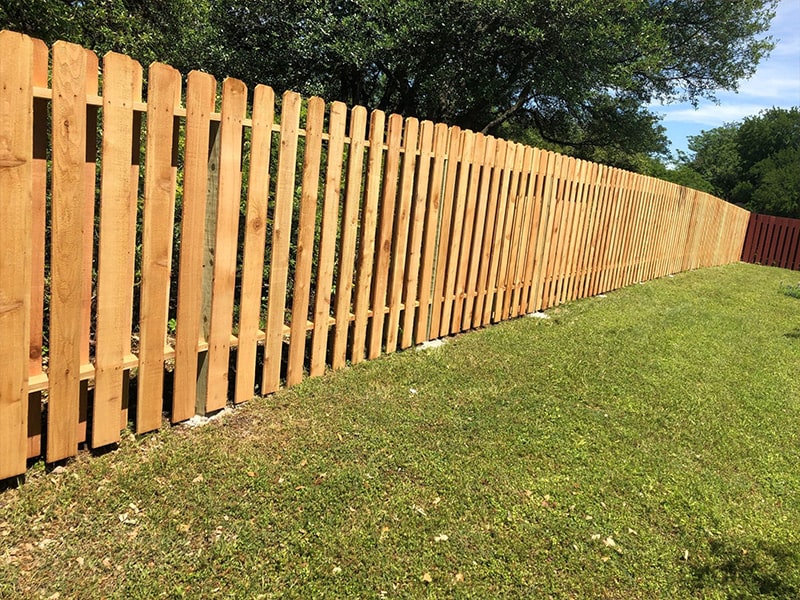
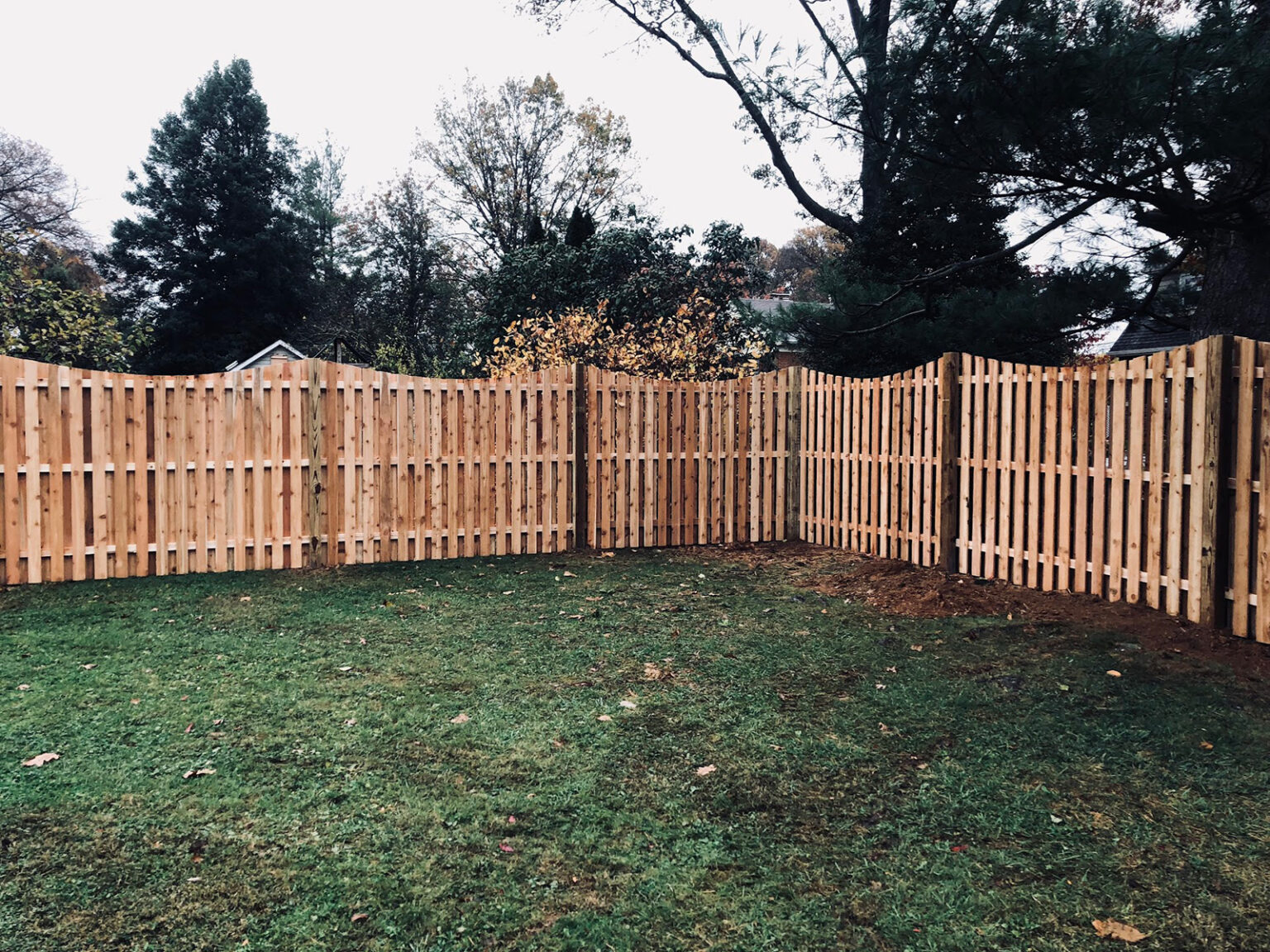
Shadowbox fences are constructed with the standard picket or dog-eared picket, but instead of being placed side by side as in a typical privacy fence or overlapping like a board-on-board fence, the boards are alternated on either side of the fence rail – about two to three inches apart.
The final effect creates shadows, resulting in the moniker. If you’re on the fence (pun intended) about selecting a shadowbox style fence, take a look at some of its most notable features below.
Shadowbox vs. Solid Privacy Fence
While a traditional solid wood fence creates a completely opaque barrier, a shadowbox design is technically categorized as a semi-privacy fence. Because of the alternating gap placement along the rails, passersby can see through the fence if they look at a sharp angle. The major advantage of this semi-private design is airflow. The gaps allow breezes to pass through freely, making the shadowbox style highly wind-resistant and preventing your yard from turning into a stagnant heat trap during the summer.
Shadowbox vs. Board-on-Board Fence
Both of these fence styles use a layered construction method, but they serve entirely different goals. A board-on-board fence features pickets that overlap completely to guarantee 100% visual privacy, but it typically leaves one side of the fence with an exposed structural frame. A shadowbox fence, on the other hand, alternates the boards across the rail with intentional spacing. This design choice provides superior “good neighbor” appeal, meaning the fence looks virtually identical from the inside and the outside, elevating the curb appeal for both properties simultaneously.
Pros and Cons of a Shadowbox Fence
Before committing to a major yard upgrade, it is crucial to weigh both the practical advantages and the potential drawbacks of the style you choose. While a shadowbox layout offers immense architectural value and climate-specific benefits for Central Texas backyards, its unique overlapping construction also introduces a few specific maintenance factors.
Aesthetic Appeal and “Good Neighbor” Design
When you share a property line, proper fence etiquette is crucial – and often regulated by local Homeowner Associations (HOAs). Traditional solid privacy fences usually have a “finished side” (the smooth pickets facing out to the street) and a “bad side” (the interior side with exposed horizontal rails and structural posts). Naturally, deciding who gets the less appealing view can cause friction.
Because a shadowbox fence alternates the overlapping boards across the central rails, it has no bad side. Both you and your neighbor enjoy the exact same high-quality curb appeal, complete with the unique dimensional blend of light and shadow cast by the staggered pickets. This symmetrical, “neighbor-friendly” construction makes it one of the most visually appealing and respectful boundary fences you can build.
Privacy
When exploring different types of wood fences, homeowners often ask if shadowbox fences provide as much privacy as solid wood fences. The short answer is that they offer an excellent middle ground. Because of the alternating boards, a shadowbox design creates a semi-private barrier that allows natural light and airflow to filter through, ensuring your backyard isn’t entirely closed off.
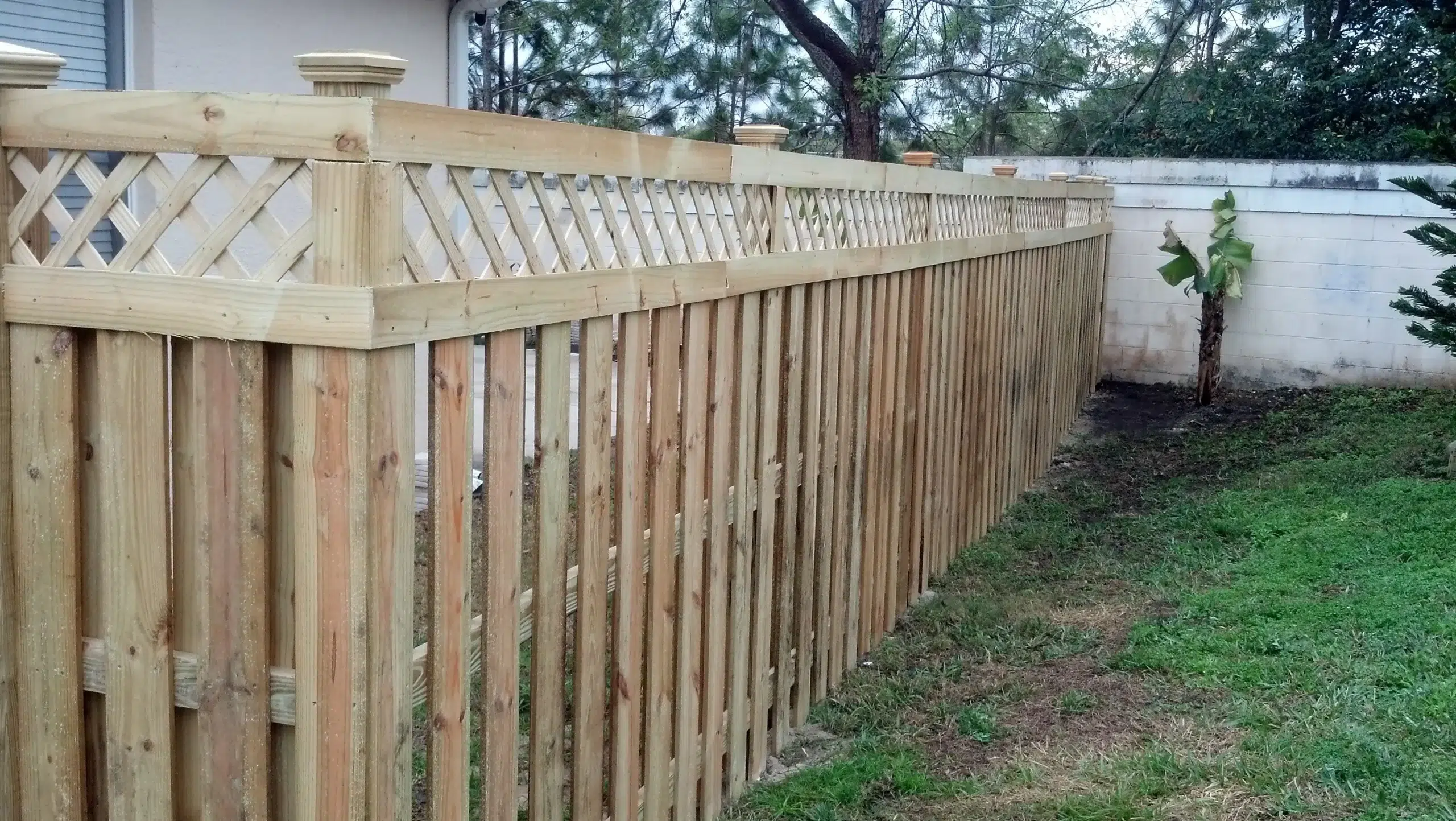
While your yard is shielded from a direct, full view, the angled gaps do mean a persistent passerby can get a glimpse inside. If your goal is to completely block the view of your yard, this is an important factor to keep in mind. However, as a quick side note: adding extra height to the structure or installing a decorative lattice top can increase privacy without losing the fence’s breathable, signature style.
Maintenance and Lifespan
While the alternating boards of a shadowbox fence offer incredible curb appeal, that same overlapping design does present a unique maintenance challenge. Reaching the tight spaces between the interior and exterior pickets to apply protective treatments requires a bit more patience and effort than a standard flat fence.
Because of this, your long-term maintenance routine will depend heavily on the materials you choose. If you are currently comparing the benefits of vinyl vs. wood fences, here is what you need to know about their upkeep and longevity:
Wood Fences (Cedar): A classic cedar shadowbox fence requires regular staining or sealing every two to three years to protect against moisture and UV damage. While it requires more hands-on care, with proper preventative maintenance, cedar offers a reliable expected lifespan of 15 to 20 years.
Vinyl Fences: If you want to skip the staining process entirely, a vinyl shadowbox fence requires virtually zero structural upkeep – just a periodic soft wash to remove surface dirt or mildew. Because it completely resists rot, moisture, and pests, vinyl boasts an impressive expected lifespan of 25 to 30 years.
Regardless of the material you choose, proactive care is the secret to a long-lasting barrier. Always take the time to inspect your fence line after the intense summer heat and heavy Texas rains. Catching loose fasteners, shifting soil, or minor warping early can save you from costly repairs down the road.
Durability and Wind Resistance
Because of its unique staggered picket placement, a shadowbox fence has a significantly better chance of staying upright during extreme weather. For homeowners in the Austin area, where sudden spring thunderstorms, straight-line winds, and heavy gusts are a frequent reality, this design is a major structural advantage.
The intentional gaps between the planks create a crucial airflow advantage. Instead of acting as a solid wall that completely obstructs the wind—which often causes traditional privacy fences to act like a sail and blow over—a shadowbox fence allows breezes to pass right through. By drastically reducing wind resistance (often referred to as wind load), the fence goes with the wind, maintaining the integrity of the structural posts.
Beyond weather resistance, the design also excels in everyday durability. The alternating board placement naturally creates an even weight distribution across the horizontal fence rails. Because the weight of the wood is balanced equally on both sides of the framework, this style actively prevents long-term sagging, leaning, or falling pickets.
Pet and Family-Friendly
When researching secure dog fence ideas, a shadowbox design frequently tops the list for local homeowners. If your dog consistently barks at solid barriers or constantly attempts to jump over to see what’s happening on the other side, you will likely benefit from this semi-private layout. Shadowbox fences are typically built to a standard 6-foot height, utilizing tight 2-to-3-inch gaps between the staggered planks. This specific spacing gives your pets the opportunity to safely peek outside without risking their well-being. The gaps are far too small for pet escapees, and satisfying their curiosity visually often discourages digging, jumping, and climbing.
Beyond keeping your pets secure, this design offers significant child safety benefits for Austin families spending long afternoons in the backyard. The slight visibility through the overlapping pickets allows parents to monitor the perimeter of their property without feeling completely boxed in. Furthermore, the structural stability provided by the alternating boards ensures the fence remains highly durable and resistant to leaning, even in high-traffic play areas.
Shadowbox fence styles and materials to consider
Shadowbox fences are a highly versatile fencing option, offering a variety of material choices that each come with their own distinct benefits and maintenance requirements.
When planning your installation, you will generally choose between mass-produced materials and custom craftsmanship. While some home improvement stores sell pre-packaged wooden panels that are relatively inexpensive, these pre-fabricated options often lack the flexibility needed for uneven ground. At Austex Fence and Deck, we custom-build our own panels and pickets directly on-site. This site-built approach ensures a polished, structurally sound finished product that perfectly accommodates the unique slope and terrain of your yard.
Because the alternating pickets are exposed to the elements on all sides, choosing a high-quality wood species is vital for longevity. Here are the most common options:
Western Red Cedar: This is the preferred choice for most Austin homeowners. Cedar is highly durable, naturally repels wood-boring insects, and boasts incredible natural rot resistance without the need for harsh chemical treatments.
Cypress: Another premium, heavy-duty option. Like cedar, cypress contains natural oils that make it highly rot-resistant and well-equipped to withstand harsh Texas weather conditions.
Alternative Woods (Pine, Fir, Spruce, Redwood): Depending on your budget, you can also opt for pressure-treated pine or other softwoods. While often more budget-friendly upfront, these materials typically require more frequent sealing and staining to protect them from moisture and UV degradation.
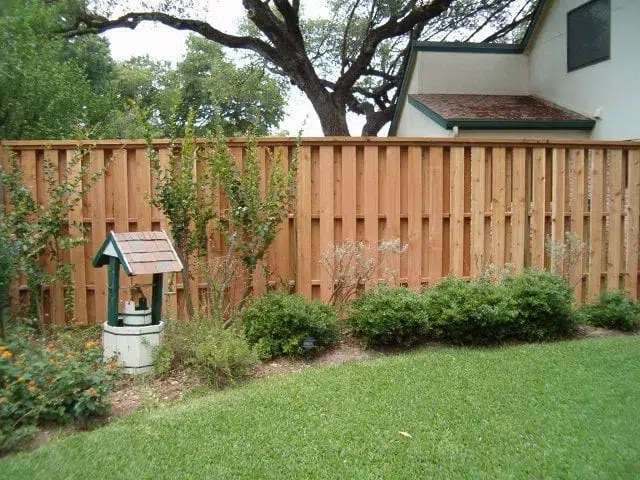
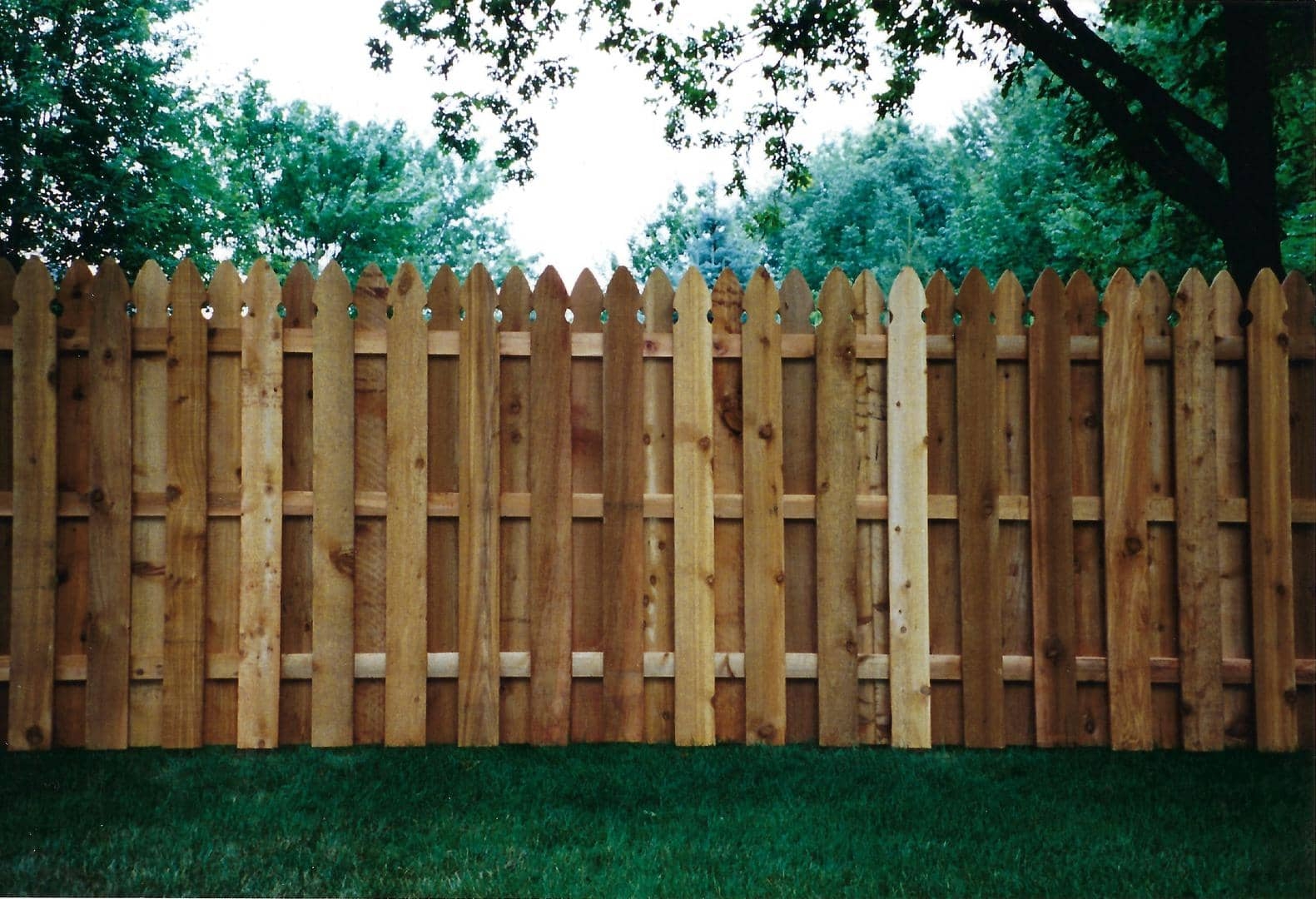
This is the classic silhouette that most people picture when they research this fence type. The alternating boards run up and down, attaching to central horizontal rails.
The Look: A timeless, traditional appearance that seamlessly blends into almost any neighborhood and easily complies with standard HOA architectural guidelines.
The Benefits: Beyond its classic charm, a vertical shadowbox fence is highly practical for sloped or uneven terrain. Because the vertical pickets can be adjusted along the rails to follow the grade of the yard (a process known as racking or stepping), it provides a much tighter, more secure fit along the changing ground contours of your property. It also draws the eye upward, providing the illusion of a taller, more imposing boundary.
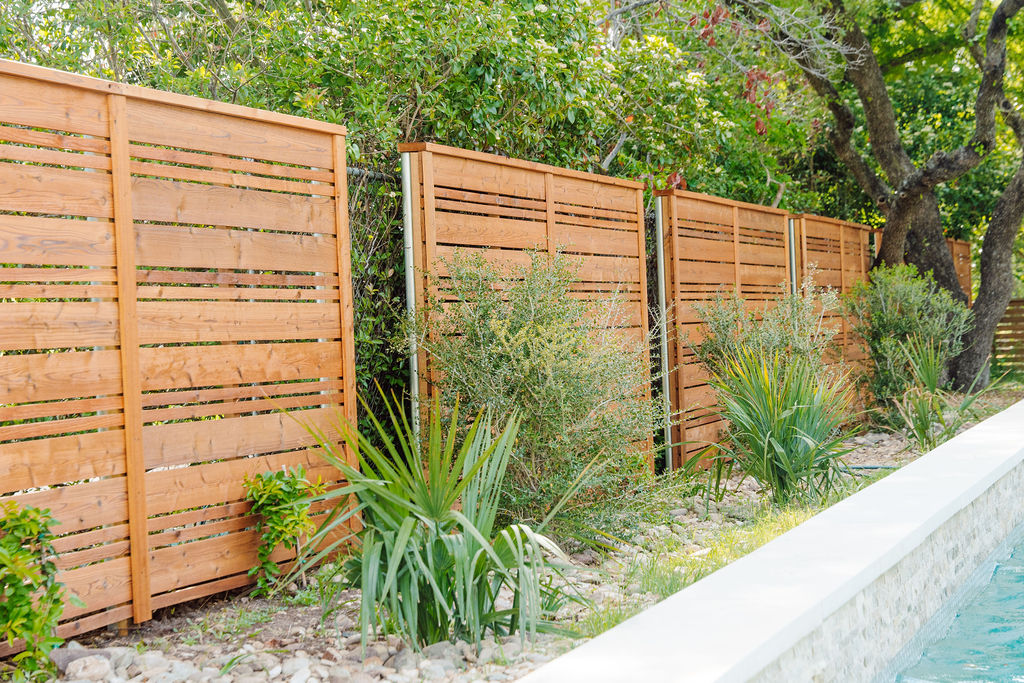
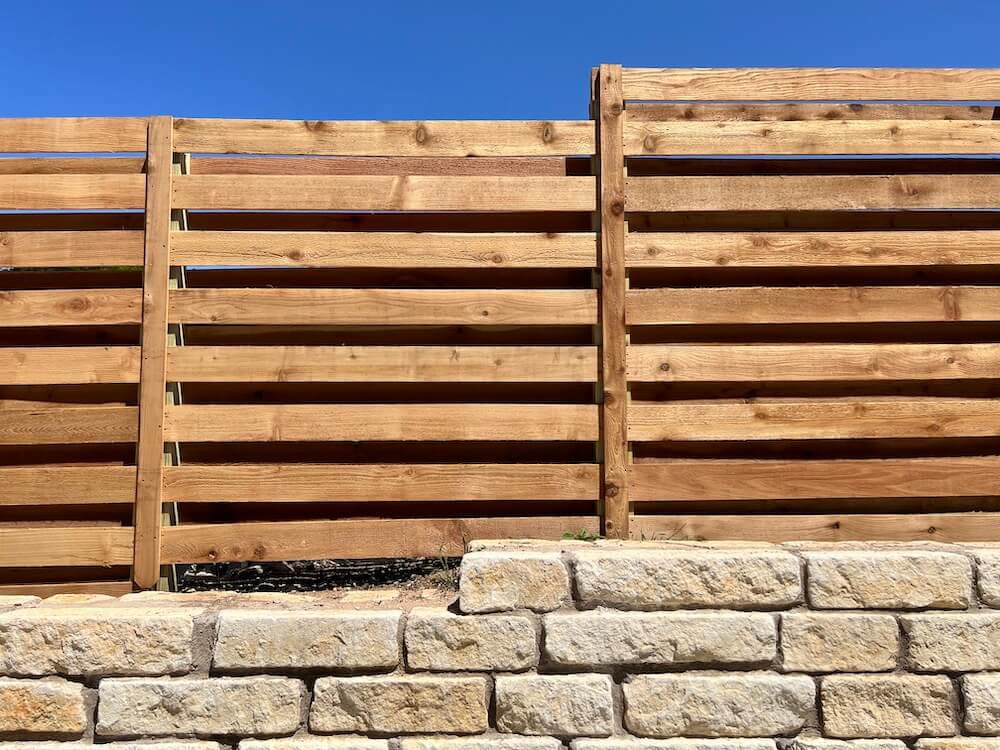
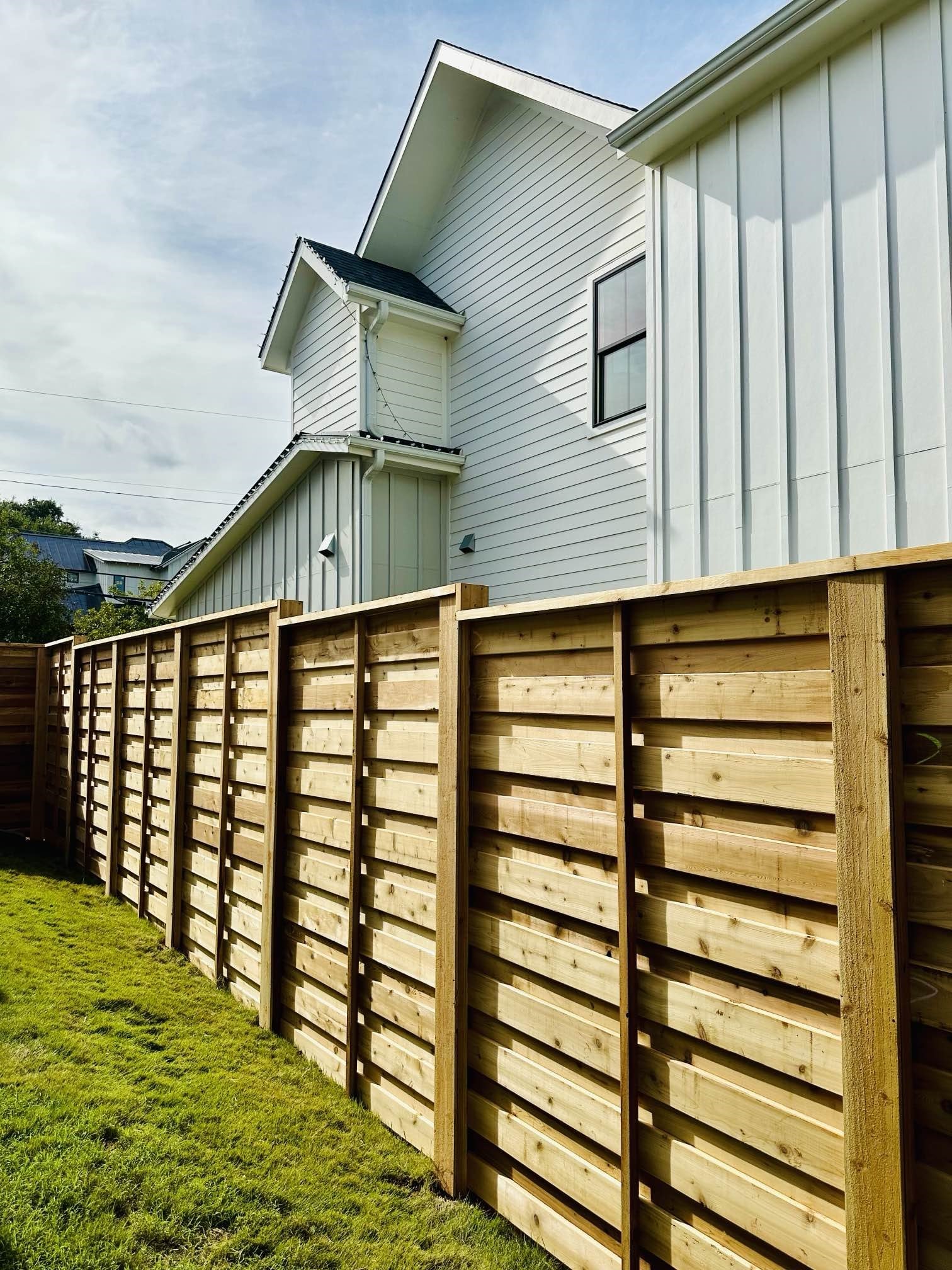
While the standard layout uses vertical pickets, horizontal shadowbox fences have surged in popularity among homeowners seeking a modern, contemporary design. In this style, the alternating boards run parallel to the ground across vertical support posts.
The Look: Sleek, clean lines that offer a high-end, custom architectural feel.
The Benefits: Horizontal slats naturally draw the eye outward, creating a visual expansion that makes smaller backyards feel significantly wider and more spacious. This style perfectly complements mid-century or modern-style homes while still delivering the signature airflow and semi-privacy of the overlapping good-neighbor design.
The dog ear cut is arguably the most common and recognizable picket style in residential fencing, making it a staple for traditional backyard enclosures.
The Look: The top corners of each vertical board are clipped off at an angle, softening the squared-off edge of a standard piece of lumber.
The Benefits: Beyond its familiar, welcoming aesthetic, the clipped corners actually serve a structural purpose. By removing the flat upper corners, the pickets shed rain and moisture more effectively, reducing the risk of water pooling and causing wood rot at the top of the fence line. It is also generally one of the most cost-effective cuts available.
For homeowners who prefer a streamlined, contemporary appearance without transitioning to a fully horizontal layout, the flat top is an ideal compromise.
The Look: Straight, sharply squared-off vertical boards. To protect the exposed end-grain of the wood, this style is frequently finished with a continuous horizontal top cap or trim board running along the entire upper perimeter.
The Benefits: The crisp, clean geometry pairs perfectly with modern or minimalist architecture. When finished with a top cap, it provides a highly polished, framed appearance that mimics the look of high-end custom woodworking.
If you want your property boundary to serve as a standout architectural feature, the gothic style introduces a touch of historic, ornate detail.
The Look: Each alternating picket features a dramatic, pointed top, often with a slight curve carved into the sides of the point, resembling a traditional spearhead.
The Benefits: This classic charm is perfect for Victorian or farmhouse-style properties. Additionally, the sharp, pointed profiles act as a natural security deterrent, making the fence significantly more difficult to climb for both wildlife and intruders.
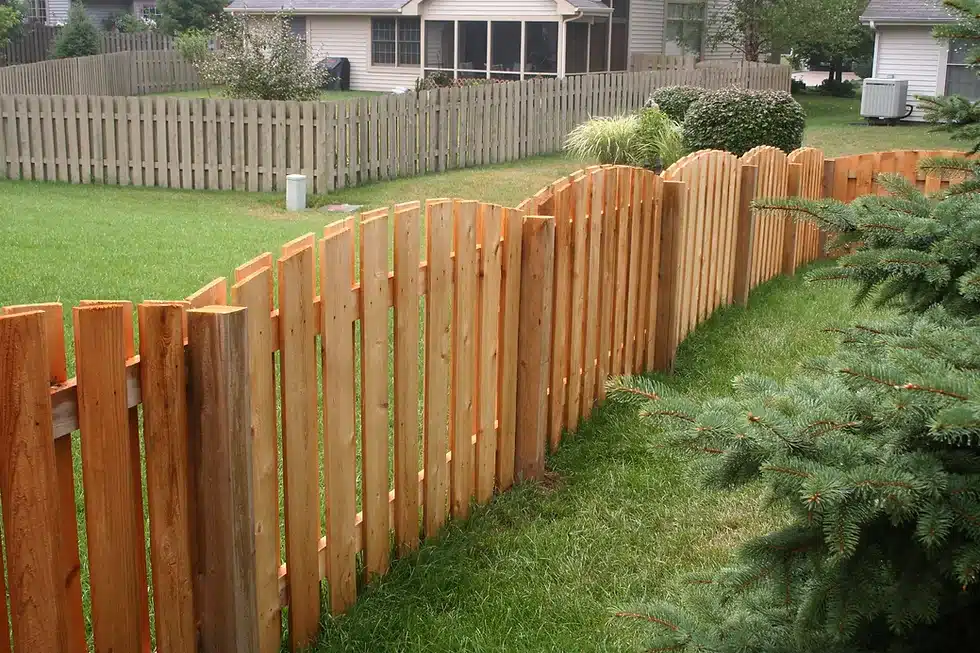
Rather than maintaining a flat, horizontal line across the top of the fence, the arched style introduces custom contouring to each individual panel section.
The Look: The top of the fence forms a convex curve, sweeping upward from the posts to peak in the center of the panel.
The Benefits: The continuous, rolling profile softens rigid property lines and adds a custom, sweeping aesthetic to the yard. It breaks up the monotony of long, straight fence runs, making the barrier feel like an intentional part of the landscaping rather than just a boundary.
The scalloped style is the exact inverse of the arched profile, offering a softer, more cottage-like appeal.
The Look: Features a concave curve where the height of the pickets gradually dips down in the center of the panel, rising back up to meet the structural support posts.
The Benefits: This creates a flowing, wave-like aesthetic along the perimeter. Because it dips in the middle, it is a great option if you want to maintain a high boundary at the posts for structural integrity but want a slightly more open, breezy view at eye level between the posts.
This hybrid style merges the semi-privacy of the alternating boards with a highly decorative upper tier, maximizing both aesthetics and functionality.
The Look: The lower three-quarters of the fence features the standard shadowbox layout, topped with a framed section of wooden or vinyl diagonal lattice grid.
The Benefits: This is the ultimate solution for maximizing vertical height (often pushing the fence to 7 or 8 feet where local codes allow) without making your yard feel like a boxed-in fortress. The lattice topper allows maximum light and airflow, and it serves as a perfect built-in trellis for climbing vines like jasmine or ivy, seamlessly blending your fence with your garden.
How much does a Shadowbox fence cost in Austin, compared to other fences?
When budgeting for a yard upgrade, understanding local market rates and material costs is essential. In the Texas fencing market, the average cost for a custom-built wood shadowbox fence typically ranges from $25 to $45 per linear foot, which includes both materials and professional installation labor. If you opt for a premium vinyl shadowbox design, you can expect that per-foot price to be slightly higher due to the increased upfront manufacturing costs of the material.
To help you weigh your options, here is a quick visual breakdown of how the shadowbox style stacks up against other common property boundaries:
Feature
Shadowbox
Board-on-board
Chainlink
Vinyl
Privacy
Semi
Full
Low
Full
Cost
$$
$$$
$
$$$
Durability
High
High
High
Very High
Maintenance
Moderate
High
Low
Low
Neighbor Appeal
Excellent
One-sided
Poor
Good
While the table gives you a high-level overview, understanding the structural differences and long-term upkeep helps explain the price tags. Here is how a shadowbox fence directly compares to other styles in terms of your overall investment:
Shadowbox vs. Chain Link: Chain link ($) is undeniably the most budget-friendly and low-maintenance option available. However, it offers zero visual privacy and scores poorly on neighbor appeal. Upgrading to a shadowbox fence ($$) is a worthwhile investment that adds tangible aesthetic value and establishes an “excellent” neighbor-friendly boundary.
Shadowbox vs. Standard Solid Privacy: Because the staggered shadowbox design requires the boards to overlap across the rails, it uses roughly 15% to 20% more lumber per panel than a basic, side-by-side solid privacy fence. Therefore, expect a shadowbox to cost slightly more upfront, though the durability against wind load is significantly better.
Shadowbox vs. Board-on-Board: A board-on-board fence ($$$) requires the tightest overlap to ensure absolute 100% privacy, making it the most lumber-intensive wood fence. Furthermore, it often results in a “one-sided” construction (leaving one neighbor with the exposed framing) and requires high maintenance to stain between the tight gaps. A shadowbox fence ($$) is a highly cost-effective alternative that delivers superior, two-sided neighbor appeal while using fewer materials.
Wood Shadowbox vs. Vinyl: A traditional wood shadowbox falls into the mid-range pricing tier ($$) and requires moderate maintenance like periodic staining. A vinyl equivalent ($$$) requires a higher initial upfront investment. However, when calculating your budget, it is important to factor in the lifetime ROI (Return on Investment) – vinyl’s “very high” durability and exceptionally low maintenance often make it cheaper over a 20-year span.
How long does it take to install a shadowbox fence?
Typically, a shadowbox fence takes about 2 to 4 days to install, depending on the total length of the fence line, the size of your yard, and the specific materials you choose. Elaborate styles, complex terrain, or the addition of multiple walkthrough gates may extend this timeline slightly.
To give you an idea of what happens during those few days, here is a high-level overview of the standard installation process:
Planning and Layout: We measure the property line, account for any slopes or uneven terrain, and mark the exact locations for the structural supports.
Setting the Posts: We dig the post holes and secure the heavy-duty vertical posts in concrete, ensuring the foundation can withstand intense Central Texas winds.
Installing the Rails: We attach the horizontal fence rails (often called runners) between the posts. These bear the weight of the lumber.
Attaching the Pickets: This is the most meticulous step for a shadowbox design. We carefully attach the overlapping boards, alternating them on either side of the rails while maintaining perfectly even 2-to-3-inch gaps.
Finishing and Cleanup: Finally, we install the gates, secure all hardware, perform a thorough quality check, and completely clean up the job site so your yard is ready to enjoy immediately.
While the concept of a shadowbox layout seems straightforward, professional fence installation is highly recommended. It can be incredibly difficult to properly stagger the boards on your own while keeping the visual gaps perfectly consistent, especially on a sloped yard. Hiring an experienced fence contractor like Austex Fence and Deck guarantees a sturdy, polished result without the DIY headache.
Why Austin homeowners love shadowbox fences
Choosing the right boundary for your property means balancing Texas weather with neighborhood aesthetics. For Austin homeowners, the shadowbox fence has proven to be the ultimate all-around performer. By merging structural ingenuity with classic architectural style, it offers a unique set of benefits that traditional solid fences simply cannot match:
Exceptional Durability: By allowing high winds and heavy gusts to pass through the overlapping boards, the design drastically reduces wind load, keeping your posts secure and upright during intense Central Texas storms.
Balanced Privacy: It provides the perfect semi-private compromise. It shields your yard from direct view while still allowing natural light and cooling breezes to circulate through your outdoor living space.
Standout Visual Appeal: The alternating pickets create deep, dimensional shadows that change throughout the day, elevating your curb appeal far beyond a standard, flat wooden barrier.
“Good Neighbor” Design: Because there is no “bad side” with exposed structural framing, it looks identical from both the inside and the outside. This guarantees equal aesthetic value for both you and your neighbor, making it one of the most HOA-friendly options available.
Whether you are looking to secure your pets, enhance your landscaping, or upgrade your home’s exterior value, a custom-built shadowbox fence is an investment you will enjoy for years to come.


 Instant Quote
 Instant Online Quote