If you’re thinking about adding a new deck to your home’s outdoor space, you’re probably weighing your options. The big question we always get from homeowners is: “Should I go with traditional wood or composite decking?”
In Texas, we know our decks take a beating from the sun. You want something that looks great for your backyard but doesn’t turn into a full-time job to maintain with high material costs. Which is why we often recommend composite decking instead of wood to our clients.
Key highlights
Composite decking offers the look of real wood with significantly less maintenance, making it ideal for Austin’s hot, sunny climate.
Wood decks have a lower upfront cost but require regular staining, sealing, and repairs, which adds up over time.
Composite boards resist rot, insects, splintering, moisture, and fading far better than traditional wood.
While composite decking costs more initially, it often saves homeowners money long-term due to minimal maintenance and a longer lifespan.
Many composite decking options use recycled materials, making them a more eco-friendly choice than natural wood.
Pros and Cons of Composite Decking vs Wood Decking
Before choosing the right decking material for your home, it helps to see how composite and wood decking compare side by side. Below is a quick breakdown of the pros and cons of each option, especially as they perform in Austin’s climate.
Feature
Composite Decking
Wood Decking
Upfront Cost
Higher initial investment
Lower upfront material cost
Long-Term Cost
Lower lifetime cost due to minimal maintenance
Higher long-term cost from staining, sealing, and repairs
Maintenance
Very low — no sanding, staining, or sealing
High — requires regular sanding, staining, and sealing
Durability
Highly durable and long-lasting
Less durable, especially in hot, humid climates
Rot Resistance
Resistant to rot and moisture
Prone to rot if not properly maintained
Insect Resistance
Not attractive to termites or bugs
Susceptible to termites and other insects
Splintering
Will not splinter
Can splinter over time, especially as boards age
UV & Sun Resistance
Designed to resist fading and UV damage
Can fade, crack, and dry out in direct sun
Temperature Performance
Engineered for heat resistance (some boards may get warm)
Can warp, crack, or dry out in extreme heat
Appearance
Realistic wood-look colors and textures
Natural wood grain and classic appearance
Lifespan
25–30+ years with warranties available
10–15 years on average with regular upkeep
Get the Real Wood Look, Without the Real Wood Problems
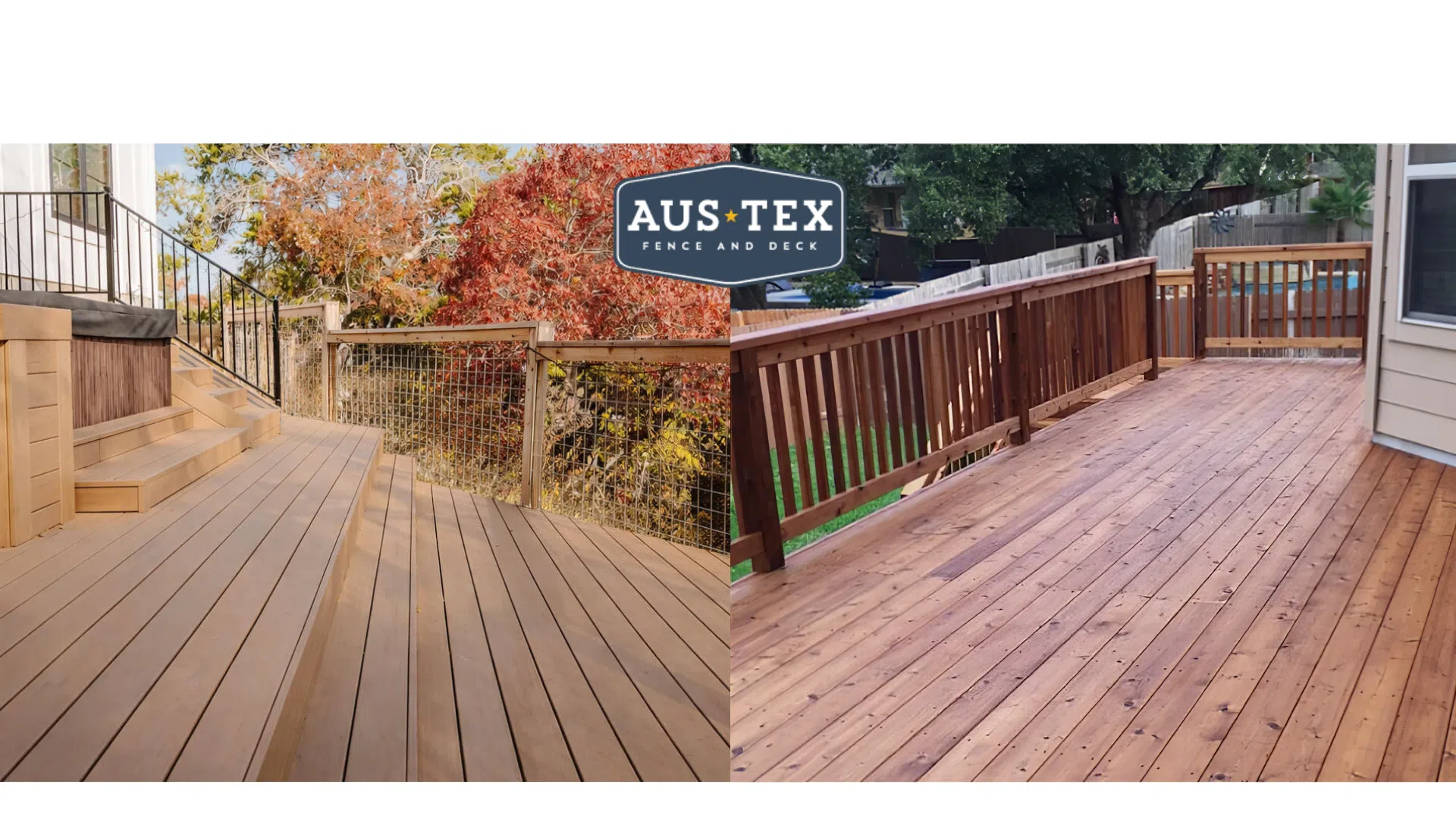
The biggest hesitation we hear from many homeowners is that they’re worried composite decking will look “fake” or “plastic.” That used to be a valid concern, but technology has come a long way making this the right decking material for Austin.
As an example, TimberTech decking, one of the main decking materials we build with, is designed to mimic the natural beauty of real wood decking. It has realistic grain patterns and rich, blended colors that you’d expect from lumber.
You can get everything from the classic look of cedar to the unique feel of hand-scraped wood, all without the constant upkeep. You get all the beauty without the drawbacks (high maintenance and repair costs).
Spend More Time Enjoying Your Deck, Not Working on It
Let’s be honest: a traditional wood deck requires a lot of work, especially in our climate. Annual maintenance to keep it looking good and prevent it from splintering or rotting, you have to sand, stain, and apply sealant to it every couple of years. You might even be looking at a total replacement in 10 to 15 years, depending on the maintenance given. That’s a lot of time, effort, and money.
This is where composite decking really shines. One of the main benefits is how low-maintenance it is. A TimberTech deck for example never needs to be stained or sealed. In terms of maintenance, you just need to spot-clean it if spills or messes occur and give it a wash once or twice a year. You’ll spend your weekends relaxing on your deck, not laboring over it.
In Austin, we need materials that can stand up to intense sun and the occasional downpour. Wooden decks can fade and rot when exposed to the elements. Even pressure-treated wood will show wear and tear after just a few seasons.
Composite deck boards are engineered differently. They have a protective cap that locks out moisture, which is the main culprit for mold, mildew, insect damage and rot. Greater durability means your deck will resist fading and weathering, staying beautiful for decades. Many composite decking manufacturers also provide product warranties that span decades. That’s peace of mind you just don’t often get with wood.
Initially, the price tag for composite decking can be higher than for a traditional wood deck. However, it’s an investment that pays for itself over time. When you factor in the recurring maintenance costs of regular staining, sealing, and repairs that come with wood decking, the long-term value of composite decking becomes clear. With little to no maintenance required, composite decking can save you money in just a few years compared to traditional wood decks.
An Eco-Friendly Choice for Your Backyard
For a long time, wood was our only option for building a deck. Unlike wood, we now have more sustainable choices that don’t require cutting down trees creating a huge environmental impact. For example, TimberTech uses recycled materials to create its products. They use up to 85% recycled materials in their composite decking collections. By choosing a product made from recycled materials, you’re helping to protect our forests and support a more sustainable future.
What are the main differences between wood and composite decking materials?
Wood and composite decking differ mainly in materials, maintenance, and long-term durability. Traditional wood decking from natural lumber offers a classic, warm look, but it requires regular staining, sealing, and upkeep to protect against rot, insects, and weathering. Composite decking is made from a blend of wood fibers and recycled plastics, giving it the appearance of wood with far less maintenance. While composite costs more upfront, it resists moisture, fading, and splintering much better than wood, making it a popular low-maintenance option for homeowners looking for long-term performance.
What is the typical lifespan of PVC decking versus composite decking?
PVC decking generally lasts 30–50 years because it’s fully synthetic and highly resistant to weather, moisture, and insects. Composite decking typically lasts around 25–30 years, depending on the brand and maintenance. Both materials outperform traditional wood’s shorter lifespan and require less maintenance, but PVC often has a slight edge in longevity due to its all-plastic construction.
Are there significant differences in appearance between PVC and composite decking?
Yes. Composite decking tends to look more like natural wood because it contains real wood fibers and can closely mimic wood grain patterns and textures. PVC decking has improved in appearance over the years, but it may still look more uniform or synthetic compared to composite decking. Composite decks are typically chosen when a more authentic wood aesthetic is a priority.


 Instant Quote


 Get an Instant Online Quote